https://www.hometalk.com/post/27933080/media?id=3760070
copy link for the how to make…..
Regular and After Hour Flower Delivery
https://www.hometalk.com/post/27933080/media?id=3760070
copy link for the how to make…..










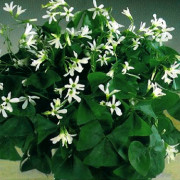
Welcome to the tidbits page of Patty’s day. Here you will find interesting notes on Shamrock, Blarney’s Stone, and of course, the Leprechaun. Happy Patty’s Day!
In written English, the first reference to the Shamrock dates from 1571, andin written Irish, as seamrog, from 1707. As a badge to be worn on the lapel on the Saint’s feast day, it is referred to for the first time as late as 1681. The
Shamrock was used as an emblem by the Irish Volunteers in the era of Grattan’s Parliament in the 1770’s, before ’98 and The Act of Union. So rebellious did the wearing of the Shamrock eventually appear, that in Queen
Victoria’s time Irish regiments were forbidden to display it. At that time it became the custom for civilians to wear a little paper cross colored red and green.
As a symbol of Ireland it has long been integrated into the symbol of the United Kingdom, along with the Rose, the Thistle and the Leek of England, Scotland and Wales. So today, on St. Patrick’s Day, a member of the British Royal Family presents Shamrock to the Irish Guards regiment of the British Army.
THE MAGIC SHAMROCK
Three is Ireland’s magic number. Hence the Shamrock. Crone, Mother and Virgin. Love, Valour and Wit.. Faith, Hope and Charity. Father, Son and Holy Spirit. Numbers played an important role in Celtic symbolism. Three was the most sacred and magical number. It multiplies to nine, which is sacred to Brigit. Three may have signified totality: past, present and future OR behind, before and here OR sky, earth and underworld. Everything good in Ireland comes in threes. The rhythm of story telling in the Irish tradition is based on threefold repetition. This achieves both intensification and exaggeration. Even today in quality pub talk, a raconteur can rarely resist a third adjective, especially if it means stretching a point. “Three accomplishments well regarded in Ireland: a clever verse, music on the harp, the art of shaving faces.”
The Leprechaun is an Irish fairy. He looks like a small, old man (about 2 feet tall), often dressed like a shoemaker, with a cocked hat and a leather apron. According to legend, leprechauns are aloof and unfriendly, live alone, and pass the time making shoes. They also possess a hidden pot of gold. Treasure hunters can often track down a leprechaun by the sound of his shoemaker’s hammer. If caught, he can be forced (with the threat of bodily violence) to reveal the whereabouts of his treasure, but the captor must keep their eyes on him every second. If the captor’s eyes leave the leprechaun (and he often tricks them into looking away), he vanishes and all hopes of finding the treasure are lost.
Near a misty stream in Ireland in the hollow of a tree
Live mystical, magical leprechauns
who are clever as can be
With their pointed ears, and turned up toes and little coats of green
The leprechauns busily make their shoes and try hard not to be seen.
Only those who really believe have seen these little elves
And if we are all believers
We can surely see for ourselves.
(Irish Blessing)
The Blarney Stone is a stone set in the wall of the Blarney Castle tower in the Irish village of Blarney. Kissing the stone is supposed to bring the kisser the gift of persuasive eloquence (blarney). The castle was built in 1446 by Cormac Laidhiv McCarthy (Lord of Muskerry) — its walls are 18 feet thick (necessary to thwart attacks by Cromwellians and William III’s troops). Thousands of tourists a year still visit the castle. The origins of the Blarney Stone’s magical properties aren’t clear, but one legend says that an old woman cast a spell on the stone to reward a king who had saved her from drowning. Kissing the stone while under the spell gave the king the ability to speak sweetly and convincingly. It’s tough to reach the stone — it’s between the main castle wall and the parapet. Kissers have to stretch to their back and bend backward (and downward), holding iron bars for support.
[contact-form][contact-field label=”Name” type=”name” required=”true” /][contact-field label=”Email” type=”email” required=”true” /][contact-field label=”Website” type=”url” /][contact-field label=”Message” type=”textarea” /][/contact-form]
While St. Patrick’s Day may not make the list of major holidays, that doesn’t mean it isn’t a fun chance for your kids to experience a little extra magic. Think back to your own childhood– don’t you remember trying to catch leprechauns?
Kids love the chance to make believe and a day filled with leprechauns, rainbows, and pots of gold is no exception. Give them something to look forward to by adding your own family traditions to the mix.
Whether you choose to make crafts or to chase magical miniature people, your kids will love the chance to have a day out of the ordinary.
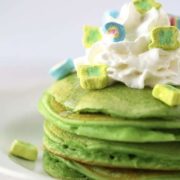
Start the Day with green pancakes
or do an experiment:
Science for kids ages 2 and up.
We love fun kids’ science and this easy activity is one of our favorites. With just a few common household ingredients like dish soap and honey, little scientists can actually pour a rainbow in a jar. There’s no need for any leprechaun magic – just 100% kid-friendly science.
P.S. Looking for some easy ways to add super cool, hands-on science to your classroom or home? Hop over and grab our super cool science kit!

This project requires quite a few supplies but most of them are probably things you already have in your pantry.

To get ready for the science activity, I grabbed my materials:
I also grabbed two identical containers and some marbles so that I could give my son a brief explanation about density.
As always, my son was really excited when I told him we were going to do some kids’ science. Before we jumped into the project though, I wanted him to understand what was about to happen, so I decided to introduce him to the concept of density first.
I explained that different liquids have different weights.
“Everything is made up of teeny tiny things called molecules,” I said. “Some of these liquids have a lot of molecules in them and some of them have only a few.”
I showed him two containers that were the same size. One had a bunch of marbles in it, one only had six.

I had my son hold the two containers and asked him which one was heavier.
“The one with more marbles,” he said. I explained that it was the same with our liquids — the ones with more “marbles” {molecules} were heavier and would stay at the bottom of the jar.

Now it was time to make our rainbow!! First, my son poured in the honey, being sure to pour it into the middle of our container. He was careful not to let it touch the sides.
Next, he poured in the corn syrup. (We’d colored it purple using the food coloring.) Again, my son poured it into the middle of the container, not touching the sides.
The dish soap came next.

We poured in regular water that we colored blue. (If you’re using blue dish soap, obviously color your water something different. Again, in the middle, in the middle!)
The olive oil went in next. Do you know what I’m going to say? That’s right, we poured it in the middle! Also, I recommend pouring a fairly thick layer of oil – it will come in handy for the next step.
Last but not least was the rubbing alcohol. We colored it red – that in itself is a cool peek at different densities because the food coloring just sits at the bottom of the alcohol when you first drop it in.

BUT WAIT! DON’T POUR IT IN THE MIDDLE!
This is where the dropper comes in. If you pour the alcohol straight in, it’ll probably pick up the blue food coloring you used in the water and your rainbow will be ruined.
We found the best way to add it was dropping the alcohol along the side of the container using a dropper. The key was not “breaking through” the oil layer into the blue water layer beneath it – that’s why I suggested putting a thick layer of oil.

Our rainbow was done! We held it up carefully to the light, making sure not to shake it, and admired our beautiful creation.
Enjoy the game!!
Thanks for letting us be a part of your party!!!



 Every Valentine’s Day, chocolate becomes part of the romantic holiday. Why? Is it because of all the health benefits of chocolate? Is it because it is simply satisfying? Or, is it just the tradition of it all….
I think the tradition angle wins out. Chocolate has been referred to as “the food of the gods” since the time of the Aztec Indians. In fact the Aztec ruler, Montezuma believed chocolate was an aphrodisiac. Christopher Columbus enjoyed the chocolate he discovered in the Americas. So, he brought it back as a tribute to Queen Isabella of Spain along with other treasures like gold! This new luxury, chocolate, and its legend as an aphrodisiac quickly made its way across the aristocracy of Europe.
In time though, chocolate made its way to the masses. By the 1800s, the Cadbury Brothers had set up shop in England making and selling chocolate to average citizens. In 1861, Richard Cadbury created the first ever heart-shaped box for Valentine’s Day. Thus, began the common link between chocolate and Valentine’s Day. A new tradition had begun.
And a few fun supporting factoids:
1) Modern science has linked the chemical phenylethylamine in chocolate to feelings of excitement, attraction and even pleasure. Maybe Montezuma was indeed onto something. You can decide on that one for yourself.
2) A survey SuzySaid/Acton and The Happy Chocolatier conducted with local women indicated that most wanted the chocolate Valentine’s Day gifts delivered to the home (not work). And, that they would share the treats with their loved ones (great news for the buyer).
3) According to HolidayInsights, though women make most of the chocolate purchases during the year (75%), men make the most purchases for Valentine’s Day (75%).
So, my guess is that men buy chocolate because it IS part of the Valentine’s Day tradition. And, from what our recent survey found – part of that chocolate giving tradition is now to send the gifts home or to simply bring them home!

Houseplants are having a resurgence in popularity, and there is a lot of information about growing and care. One of my favorite authors, Peter McHoy, has been writing books on houseplants for many years. His recent “The Complete Houseplant Book: Identifying, Choosing and Maintaining Plants for Your Home” (Anness Publishing, 2015) would be a good title for your gardening shelf.
Just as in outdoor gardens, you should consider the needs of each plant you choose, since growing conditions are not the same for all. Those to be informed about include light and watering, types of containers, soils, plant diseases and insects. This column cannot possibly address all these issues in detail, so I will recommend some helpful websites.
Water and light are keys for success. Over-watering, especially in winter, is the No. 1 killer of houseplants. Since they take in energy from sunlight to produce food, and in winter there is less light, plants need less water at this time of year. Like many animals, in winter plants want more rest than in other seasons.
I water when the soil has dried out in roughly the top one-third of the pot. However, indoor cacti and succulents need less water than an African violet. This is why knowing each plant’s needs is important.
Observe the light in your house, and choose plants that are appropriate for the space. Low-light areas are those where there is no direct sun. Medium or filtered light is where sunshine may be coming through a curtain. Bright light is the where indoor sunlight is the strongest. North-facing windows will likely have the least amount of light, west facing the most.
Determine what the light patterns in your house throughout the day. The places that have the sunlight the longest are the spots for sun-loving plants. And even indoors, sunlight patterns change with the seasons

Want a pet-friendly houseplant with blooms? Look no further than African Violet. This versatile, hardworking houseplant is right at home with your pets. It comes in a range of purple hues, and it’s low maintenance and thrives without bright light.

Tillandsia varieties are modern, cool, and best of all, safe for pets. But beware: Cats and dogs alike will love chewing on their spindly leaves—make sure you keep them out of reach.

The variegated gray-and-green leaves of Aluminum Plant make it an attractive option for the home, as well as a great nontoxic plant for cats and dogs alike.

Unlike its dangerous holiday counterpart amaryllis, Christmas cactus is thankfully nontoxic to cats and dogs. It may cause intestinal discomfort if ingested, but overall it’s a safer choice than many other festive plants.

Identifying ferns can be a bit tricky, as there are several plants with the word “fern” in their name that are not actually part of the Pteridophyta family. True ferns such as Boston and maidenhair (pictured) are fair game for pet-friendly households; beware of toxic misnomers such as asparagus fern, which is actually part of the lily family.

The friendship plant is named for the ease with which it can be divided and shared—so if you happen to receive such a gift, rest assured it’s safe for your cats and dogs. But beware, pets may be especially drawn to the fuzzy, crinkly leaves.

Indoor herb gardens are an easy, fun way to add fresh flavor to your cooking. But not all herbs are created equal when it comes to pet safety. Standards like lavender and oregano are off-limits, but pets can handle basil (pictured), sage, and thyme.

Pretty lace flower vine grows best in hanging baskets, out of reach of curious cats and dogs. But should an extra-persistent pet make their way into the pot, they’ll be safe.

This quirky plant with blooms that resemble tubes of lipstick is happily safe for cats and dogs alike. A native of the tropics, it thrives in bright light and loves being outside in the warmer months.

Parlor palm is the perfect solution for pet owners looking to add a small tree. Safe for cats and dogs, it’s also great for beginners.

The ever-common phalaenopsis orchid (the one you’re most likely to see in the floral shop) isn’t harmful to pets. But one thing to watch for: Dogs and cats who love to chew may get into trouble in the potting mix, which contains a large amount of bark.

Polka dot plant is perfect for adding a fun splash of pattern to miniature gardens, terrariums, mixed containers, and more. Available in an array of colors such as white and pink, it’s as versatile as it is whimsical.

Prayer plant, topping out at 6-8 inches, is ideal for small spaces such as bookshelves and end tables. Its red, cream, and green leaves curl up at night, giving it its name. What’s more, it’s one of the easiest houseplants you can grow.

This indoor gardening classic is a staple for many reasons, not to mention it’s a cat- and dog-friendly plant. A fan of both pots and hanging baskets, this happy-go-lucky plant will thrive anywhere indoors.

Many of the most popular succulents—including hens and chicks, echeveria, and rosettes—aren’t problematic, but with so many varieties on the market, it’s best to research each individual plant. Jade, for example, while similar to other succulents, is actually dangerous.