Choosing a Flower Arrangement for a Man’s funeral or Memorial service
Thank you for giving us the opportunity to help you decide on the perfect choice of flowers. While most flower varieties are suitable for a man’s funeral, there are some that are considered as more neutral or a masculine choice. Below we have listed some of the more popular choices for a man’s funeral or memorial service.
In addition to the type of flower and the choice of arrangement there are also colors that are considered more appropriate for men, colors viewed as more masculine. Usually primary colors or neutral colors are considered the best choice. Softer colors like pink, lavender and light blue are often considered as feminine.
While this has been written as a guide, there are no firm rules. Often the best choices are the favorite colors of the departed, or his favorite flowers. For example, for a sports fan you might choose the colors of his favorite team and include a personal item in the arrangement that was special to him. For a gardener you might choose an arrangement that includes his favorite flowers.
If you have any questions, please feel free to call. We are always happy to assist you to choose the perfect floral arrangement.
Our Most Popular Funeral flower Choices for Men
All Rose funeral flower tribute with more than 12 dozen roses. Our #1 choice for men. Roses are a perfect choice for men, and red is a masculine symbol of love. This traditional all rose tribute is the most often chose flowers for a man’s funeral.
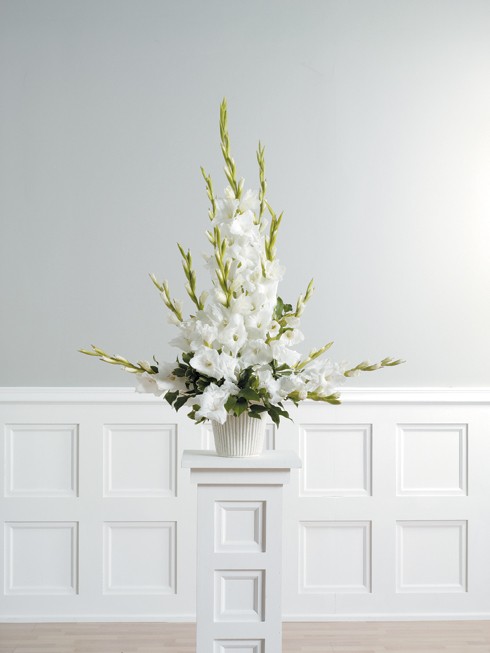
Traditional white gladiolus arrangementThis traditional gladiolus arrangement is one of our most popular floral arrangements. There are many masculine colors that you can choose from making this an excellent choice for man’s funeral or memorial or as sympathy flowers.
Flower Ideas for Men, Dad
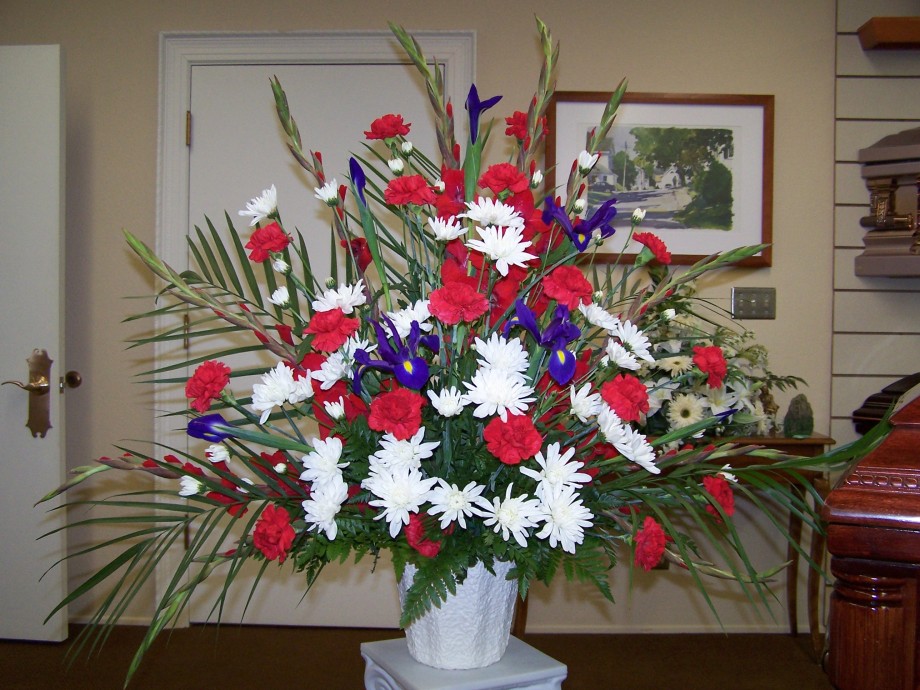
Traditional red white and blue The combination of blue, white and red flowers in this traditional basket arrangement is a striking choice for men. This is an excellent choice as a sympathy arrangement or for a funeral, memorial or graveside placement.
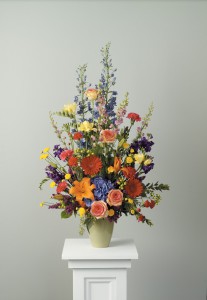
Celebration Vase of FlowersThis large vase is a bright masculine choice, especially for a celebration of life.
Colorful round Memorial Flower WreathThis popular memorial wreath is often ordered for masculine memorials, it features grouping of Bold colors that can be substituted for his favorite colors.
The official color of joy and sunshine, Yellow is a color proven to make you smile. In the floral world we see yellow in all of its shades, from bright lemon to muted mustard to buttery cream.
Of a the colors on the spectrum yellow is the most difficult for the human eye to take in, meaning that all the versatile shades of yellow will stand out in your design. An all yellow bouquet will make a punchy bold statement and yellow sprinkled throughout an arrangement will bring the eye to that pop of color. Summer is an excellent time for a vast selection of yellow product offerings. Go and spread cheer with yellow!
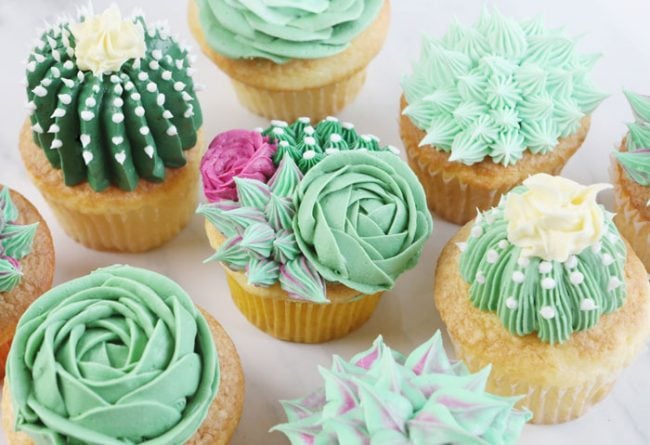
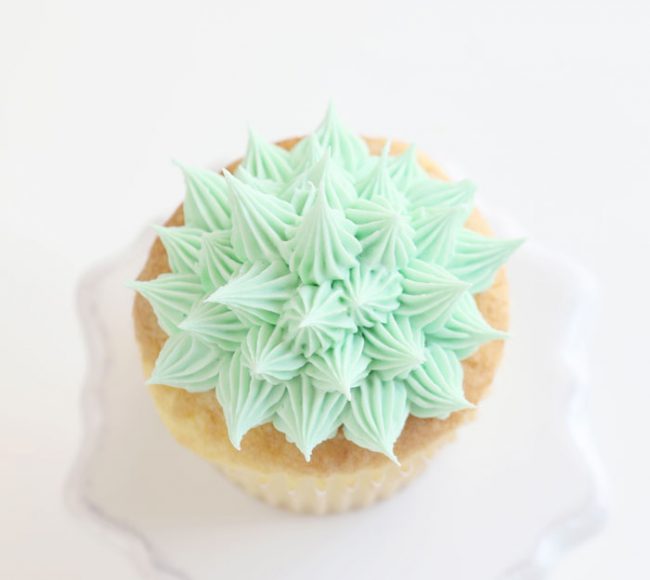
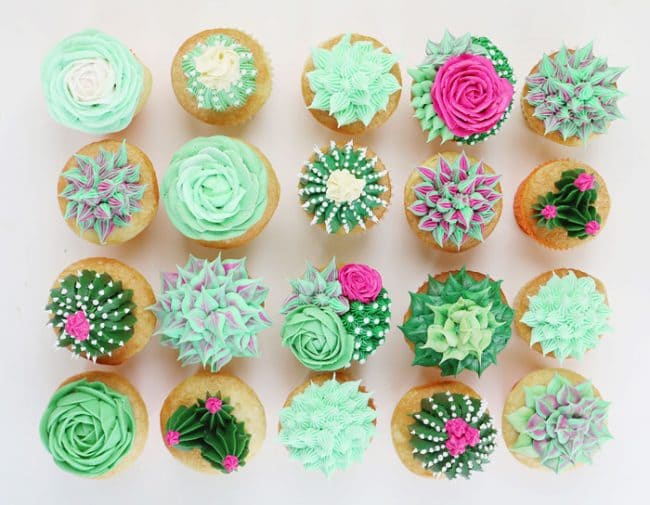
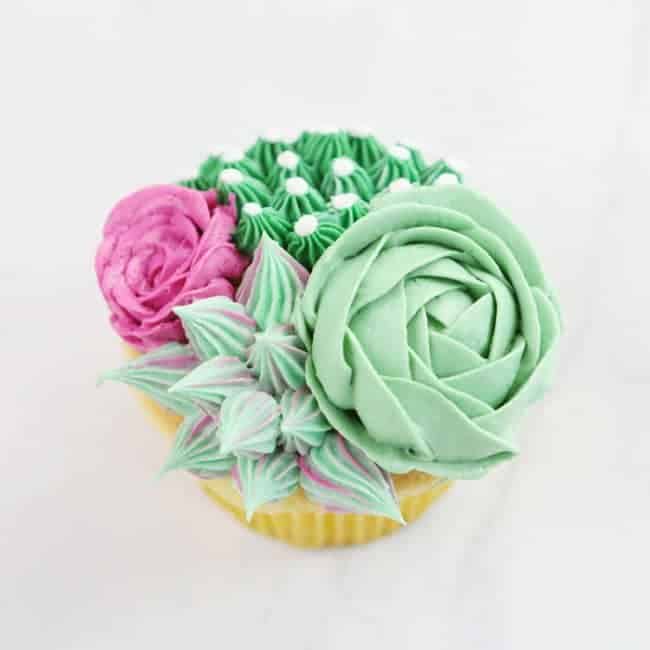
These Succulent cupcakes are a fun to way treat anyone who loves succulents! Imagine inviting the kids to help and creating memories as well as delicious cupcakes! o!
How to Make Succulent Cupcakes:
Green, yellow, pink food color (I used McCormick)
Begin by baking cupcakes and allow to cool to room temperature. Prepare your buttercream.
Now you can tint your frosting for the succulent cupcakes. I did 3 shades of green; a light, medium, and dark tone. I prepared a dark pink (mauve) and a yellow, then left a little buttercream white. Place all frosting in pastry bags fitted with coupler sets.
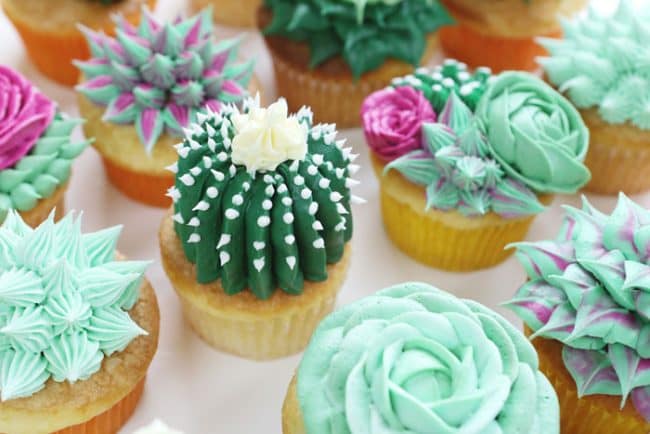
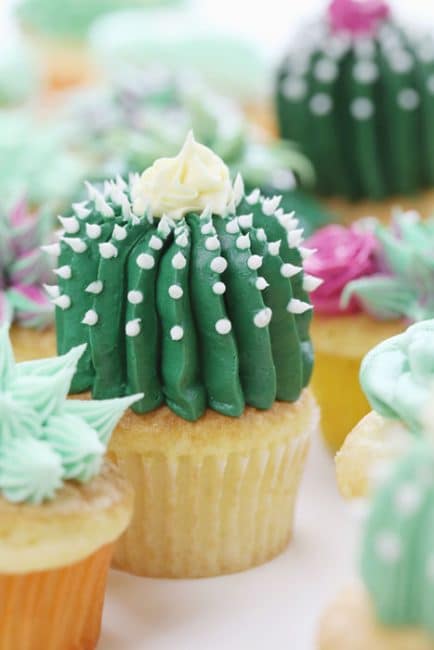
Barrel Cactus Succulent Cupcake
Tips: #352 with dark green frosting, #225 with yellow frosting, #3 with white frosting
Begin by piping out a tall center tower of frosting. (You can also place a mini cupcake or donut ball on top of the cupcake. Now hold the #352 tip flat against the tower of frosting and apply pressure as you move up. Release pressure at the top and quickly pull the bag away. Repeat.
Now grab the bag with white frosting and the #3 tip. Right on the edge of the green frosting apply a dot of frosting and quickly pull away. These white dots represent the needle on a barrel cactus. I made mine farther apart on the bottom and grouped them closer towards the top. Do this around the entire cupcake.
Finish with a yellow flower on the top of the frosting cactus.
Short Spiky Cactus Succulent Cupcake
Tips #32 with light green
Pipe out a small mound of frosting in the center of the cupcake. Starting at the base of the frosting, squeeze a row of tiny star shapes all the way around the cupcake. Once you have one row of spikes, continue moving up and around the cupcake until you reach the top.
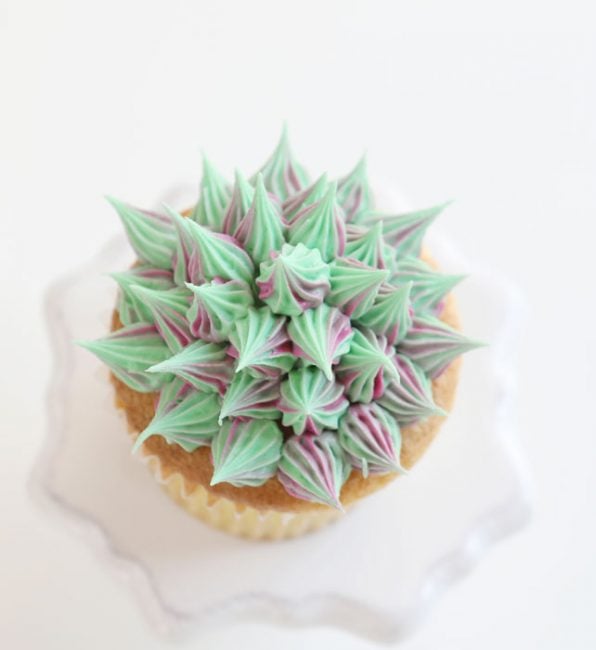
Green and Pink Spiky Cactus Succulent Cupcake
For this version, you will prepare your frosting a bit different. I added both green and pink frosting to one pastry bag. Press an empty pastry bag into a tall kitchen glass. Spread some pink frosting along one side of the bag and then fill in the bag with green frosting.
With the #32 tip, pipe out a small mound of frosting in the center of the cupcake. Starting at the base of the frosting, squeeze a row of tiny star shapes all the way around the cupcake. Once you have one row of spikes, continue moving up and around the cupcake until you reach the top.
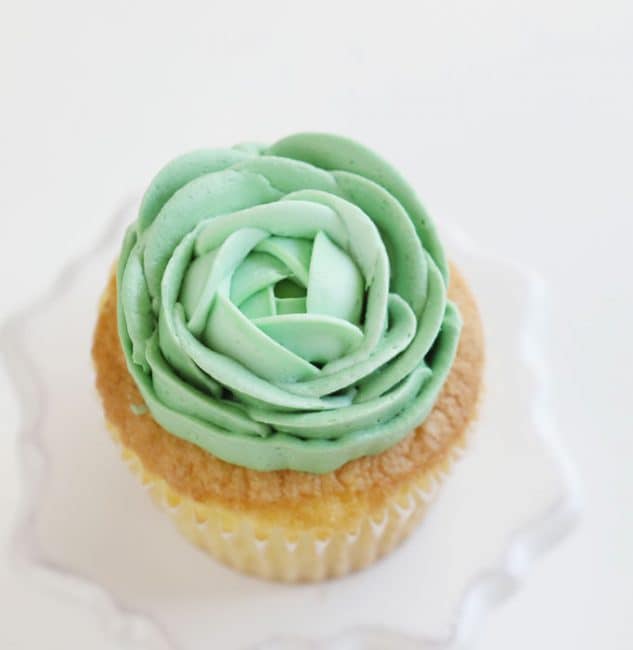
Desert Rose Succulent Cupcake
Tip #104 with light green and medium green frosting
Starting at the center of the cupcake, pipe a small mound of light green frosting. Now hold your tip at the base of the mound and apply pressure, moving over the top of the frosting mound. Rotate your cupcake 1/3 way around and repeat. Rotate cupcake another 1/3 way around and repeat. It should resemble the tighter inner petals of a rose. Now, starting at the base of the frosting, apply pressure and move upward slightly over the frosting and pipe another petal. Repeat a few more times and then switch to the medium green frosting. Repeat with the petals around until you almost reach the edge of the cupcake. Now hold the tip against the cupcake and pipe around the entire flower. This is optional but can help create a cleaner edge around the base.
After making a few of each design, you will have a strong grasp on how to execute them in different ways.
Try with different colors and add different tips… the sky is the limit! These Succulent Cupcakes are a really delicious way to impress friends and family.
While the common name of strawflower doesn’t paint a pretty picture, you will understand the name once you feel the coarse, straw-like flowers. The showy petals of this plant aren’t even petals at all, but modified leaves called bracts. These bracts serve to protect the tender flower parts within until they are ready to open and be pollinated—hence their coarse texture and resilient nature. The showy blossoms can often be found in a variety of colors, most commonly warm tones of yellow, orange, and red and sometimes shimmering pink and white. The flowers are held above narrow, green foliage that is often covered in dense hairs. These hairs protect the plant from drying out, making strawflower a suitable plant for dry growing conditions.
Strawflower Care Must-Knows
If you are planning on growing strawflower plants from seed, it is best to start a little earlier than usual. Generally, the ideal time is 6-8 weeks before the final frost date in your area. At this point seedlings can be placed outdoors in well-drained soil. Hailing from tough areas in Australia, they can occasionally be found growing in very dry areas, sometimes even in pure sand. If they are planted in too fertile soil, plants can become overly lush and floppy. However, if planted in containers, plants will appreciate occasional fertilizer to help encourage continuous blooms. When it comes to watering, it is best to keep plants on the drier side as too much moisture will lead to rot.
For the best and brightest colors and the most floriferous display, be sure to plant in full sun. This will also help to prevent flopping and weak stems, which is important when growing cut flower varieties since these types can become quite large. Because the blossoms on strawflowers often look good even when fading, deadheading is not necessary but can help encourage a fresh set of blooms. If left on the plant in warmer climates, the flowers will help reseed and encourage a new generation of plants. If you are planning on cutting strawflowers to dry and use in arrangements, simply cut stems and hang upside down to air dry.
Annuals For Drying
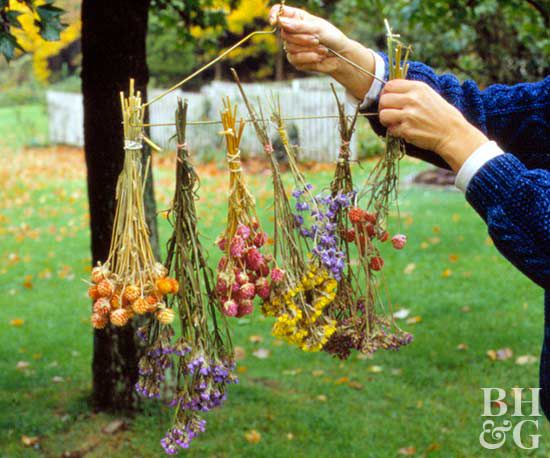
Air-dry annuals in bunches upsidedown.
Many annuals are beautiful when dried. Among the best flowers for drying are hollyhock blossoms, zinnias, and cosmos dried in sand or silica gel (found at craft and hobby stores); love-lies-bleeding, prince’s-feather (Amaranthus hybridus var. erythrostachys), cockscomb, and plumed celosia hung upside down and air-dried; and snapdragons dried in silica gel. Most of the ornamental grasses, including hare’s-tail grass (Lagurus ovatus), quaking grass (Briza maxima and B. minor), foxtail millet (Setaria italica), and squirreltail grass (Hordeum jubatum) dry perfectly by hanging bunches upside down in a dry room, but they must be picked when fresh. Don’t forget the leaves of dusty-millers, which are elegant when pressed and dried.
Many annuals can be air-dried by gathering them in bunches and hanging them upside down in a well-ventilated place. Hanging them on a coat hanger works well.
1. The classic way to dry flowers is to gather them in small bunches and hang them upside down in a dry, airy place out of direct sun. You might try suspending the flowers from coat hangers.
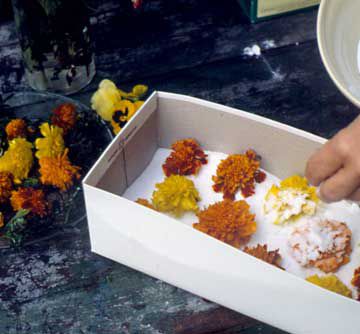
2. Many-petaled flowers such as zinnias and marigolds often dry best in a desiccant powder like silica gel. Lay the flower heads on a layer of desiccant, then sprinkle more powder over the flowers to cover.
Timesaving Tip: Some annuals will dry perfectly when simply stuck in a bottle. Flowers to dry this way include starflower, statice, globe amaranth, and love-in-a-mist.
More Ways to Dry Annuals
On Wires
Flowers that feel dry and papery are very easy to preserve. The strawflower, for example, has petallike bracts that are firm and brittle. To dry, simply clip the bloom from the plant just beneath the head (the stem doesn’t dry well). Select flowers that are just beginning to open. Right after picking, insert a 20-gauge wire through the stem end of the flower head; stick the other end of the wire into a foam board. Let dry for 3 weeks.
Upside Down
Another flower that’s easy to air-dry is the globe amaranth. Cut the stems when the flowers are just starting to show color and hang them upside down in a dry area for about 3 weeks. Dry baby’s breath, fernleaf yarrow, silver-leaved artemisia, liatris, ammobium, statice, celosia, ‘Victoria Blue’ salvia, hydrangea, and long-stemmed roses in a similar way. These flowers will dry best if you also follow these tips:
Cut stems at bouquet length
Cut flowers in mid-morning
Pick flowers at their peak
Put them in a vase of cool water if you can’t hang them to dry right away
In Silica Gel
Some flowers, such as dahlias, zinnias, feverfew, delphiniums, snapdragons, and daisies, dry best in silica gel (found at craft and hobby stores). Place flower heads face up on a 1-inch bed of silica gel crystals in an airtight container. Also, gently shake crystals over flowers, covering completely. Seal container. Leave for two days to one week, checking often to avoid overdrying (flowers will become brittle).
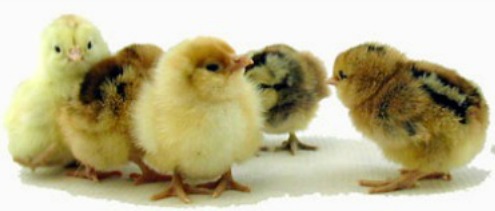
The adorable, fluffy chick soon hits its gangly adolescent stage, and quickly thereafter advances to full-grown hen or rooster. Then what?
They are so cute! And children’s squeals and pleas are difficult to discount. Annually, thousands of baby chicks and ducks are purchased as Easter gifts. Yet, the adorable, fluffy chick soon hits its gangly adolescent stage, and quickly thereafter advances to full-grown hen or rooster. Then what?
If it is too late – if the deed has already been done – there are do’s and don’ts to consider.
– Do keep the babies watered, fed, warm and protected, instructs tractorsupply.com. Chicks will quickly outgrow a cardboard box and need clean, fresh shavings for bedding.
– Don’t release into the wild. Animal shelters may not take chickens or ducks, only unwanted Easter rabbits, so some individuals believe that to release them is most humane. However, inhabitat.com says these are domestic species and do not have the innate instincts to fend for themselves. They will quickly become prey to house cats, predatory birds or nocturnal creatures such as raccoons, foxes and opossum.
– Do find out zoning laws. Countryside magazine in April pointed out that since chicks and ducks are considered livestock, there may be neighborhood or city rules regarding raising them in residential areas.
– Do plan to have a secure coop with a roost/hen house where “fully-feathered” (mature chicks) and grown chickens and ducks can move around as well as feel safe, instructed Countryside. Even if planning to allow free range in the backyard, a coop is needed as their protection against nighttime predators.
– Do wash hands immediately after handling, as live poultry, especially, may have Salmonella germs in their droppings and on their feathers, feet and beaks, even when they appear healthy and clean, cautions tractorsupply.com.
Chickens and ducks often live for several years – generally five to eight, according to Countryside. Consider the long-term commitment.
If impossible to care for, seek through social media farming sites, or by word of mouth, a rural dweller willing to add the critters — free of charge — to their own broods.
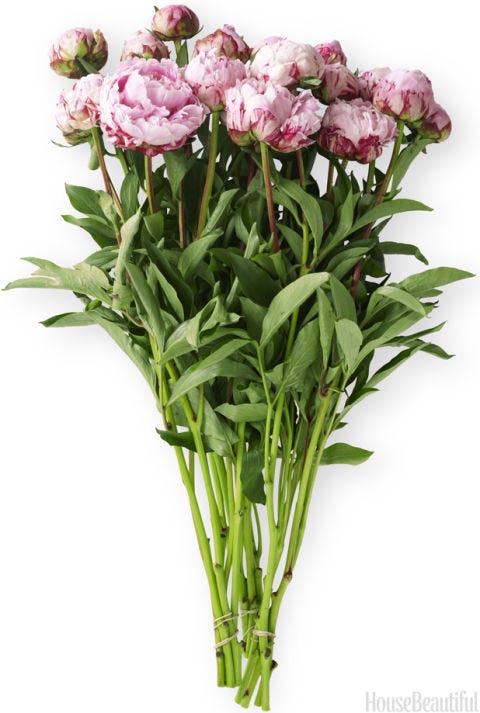
When they are fresh cut and still in bud stage, because it allows you to enjoy the full blooming process. If you get peonies that are already fully open, they will look gorgeous but will only last a few days at most.
Once your peonies are purchased…
1. Quickly process the flowers. Don’t worry if the leaves appear a little limp. They just need some water to perk up!
2. Peonies will usually arrive wrapped in paper. Carefully remove and put the paper wrap aside.
3. Fill up a clean container or vase with at least 3″ to 4″ of room temperature water.
4. With sharp floral shears, cut at least ½” to 1″ off each stem at a diagonal and quickly place it in the water. You’ll want to make sure you remove any foliage that falls below the water line.
5. After you’ve cut each stem, recommends re-wrapping the paper around the peonies. Depending on your container, you can wrap around the whole vase. This is not necessary, but wrapping around the peonies keeps them upright and enables them to hydrate better.
6. You can remove the paper wrap after 3-4 hours.
7. The rate at which the blooms open will vary and depend on a variety of factors. Some peony varieties (e.g., coral charm) open quickly, while others may take a few days to start. The temperature of the room they are kept in will also affect how quickly they open: warmer room = faster open rate.
8. You’ll want to keep an eye on the water levels as peonies can drink quite a bit of water so you may have to re-fill the vase often. Also, you’ll want to clean and refill the vase and re-cut the stems at least every 2-3 days to maximize vase life.
If you’ve already cut and put the stems in water, don’t worry you can still slow down the process. If you have a fridge big enough, just place the whole vase inside (making sure to keep them away from fruits and vegetables).
Mother’s Day in the United States is annually held on the second Sunday of May. It celebrates motherhood and it is a time to appreciate mothers and mother figures. Many people give gifts, cards, flowers, candy, a meal in a restaurant or other treats to their mother and mother figures, including grandmothers, great-grandmothers, stepmothers, and foster mothers.
Is Mother’s Day a Public Holiday?
Mother’s Day is not a public holiday. It falls on Sunday, May 12, 2019 and most businesses follow regular Sunday opening hours in the United States.
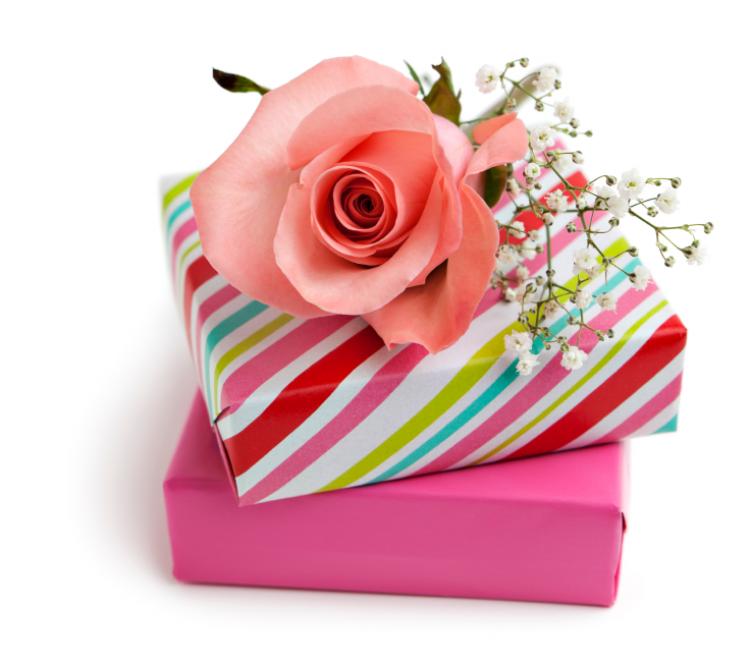
Many people send cards or gifts to their mother or mother figure or make a special effort to visit her. Common Mother’s Day gifts are flowers, chocolate, candy, clothing, jewelry and treats, such as a beauty treatment or trip to a spa. Some families organize an outing for all of their members or hold a special meal at home or in a restaurant. In the days and weeks before Mother’s Day, many schools help their pupils to prepare a handmade card or small gift for their mothers.
Public Life
Mother’s Day is not a federal holiday. Organizations, businesses and stores are open or closed, just as they are on any other Sunday in the year. Public transit systems run to their normal Sunday schedules. Restaurants may be busier than usual, as some people take their mothers out for a treat.
Background
The origins of Mother’s Day are attributed to different people. Many believe that two women, Julia Ward Howe and Anna Jarvis were important in establishing the tradition of Mother’s Day in the United States. Other sources say that Juliet Calhoun Blakely initiated Mother’s Day in Albion, Michigan, in the late 1800s. Her sons paid tribute to her each year and urged others to honor their mothers.
Around 1870, Julia Ward Howe called for Mother’s Day to be celebrated each year to encourage pacifism and disarmament amongst women. It continued to be held in Boston for about ten years under her sponsorship, but died out after that.
In 1907, Anna Jarvis held a private Mother’s Day celebration in memory of her mother, Ann Jarvis, in Grafton, West Virginia. Ann Jarvis had organized “Mother’s Day Work Clubs” to improve health and cleanliness in the area where she lived. Anna Jarvis launched a quest for Mother’s Day to be more widely recognized. Her campaign was later financially supported by John Wanamaker, a clothing merchant from Philadelphia.
In 1908, she was instrumental in arranging a service in the Andrew’s Methodist Episcopal Church in Grafton, West Virginia, which was attended by 407 children and their mothers. The church has now become the International Mother’s Day Shrine. It is a tribute to all mothers and has been designated as a National Historic Landmark.
Mother’s Day has become a day that focuses on generally recognizing mothers’ and mother figures’ roles. Mother’s Day has also become an increasingly important event for businesses in recent years. This is particularly true of restaurants and businesses manufacturing and selling cards and gift items.